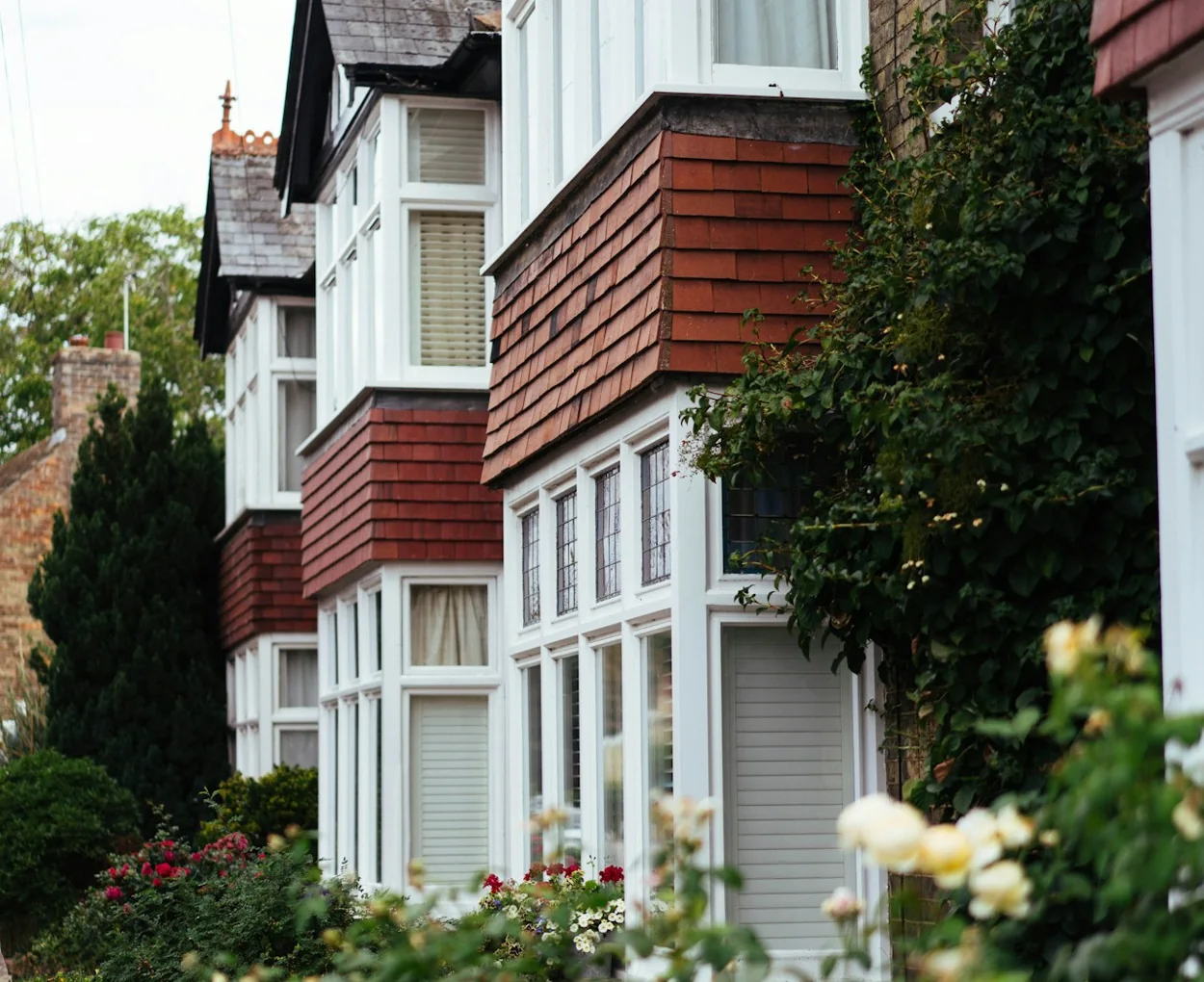
Bay windows are everywhere in Leeds: on Victorian villas in Roundhay, Edwardian terraces in Chapel Allerton and thousands of 1930s semis in Moortown and Crossgates. They let in a lot of light, but they also lose a lot of heat, and older bays often have extra problems hidden above the frames.
Bay or bow?
A bay window has three or more flat sections set at angles, usually 45 or 90 degrees. A bow window uses four or more narrower sections to make a gentle curve. Both can be made in uPVC, aluminium or timber, as casements or as sashes.
Why bays need extra care
- Structure. In many older bays, the original timber frames help hold up the bay roof or the brickwork above. The new frames may need bay poles or a structural support fitted so they don't carry that load.
- The bay roof. Lead, felt or tiled bay roofs often leak by the time the windows are replaced. It is worth checking at the same time.
- Movement. Cracks above or below the bay can point to movement that needs looking at before new frames go in.
- Seat boards and sills. Replacing internal boards and external sills makes the finished job look much neater.
Styles that suit the house
On a period house, sash-style or slim casement bays with glazing bars keep the character. On a 1930s semi, casements with a top light and leaded or Georgian bar details often match the original look. Coloured frames can lift a red-brick or stone front.